
The short answer
Book wall prep when walls have cracks, holes, texture, old wallpaper residue, glossy or chalky paint, or water damage. We repair, skim, sand and prime with the right wallcovering primer so paper sits flat, seams stay closed and removal later does not tear the drywall.
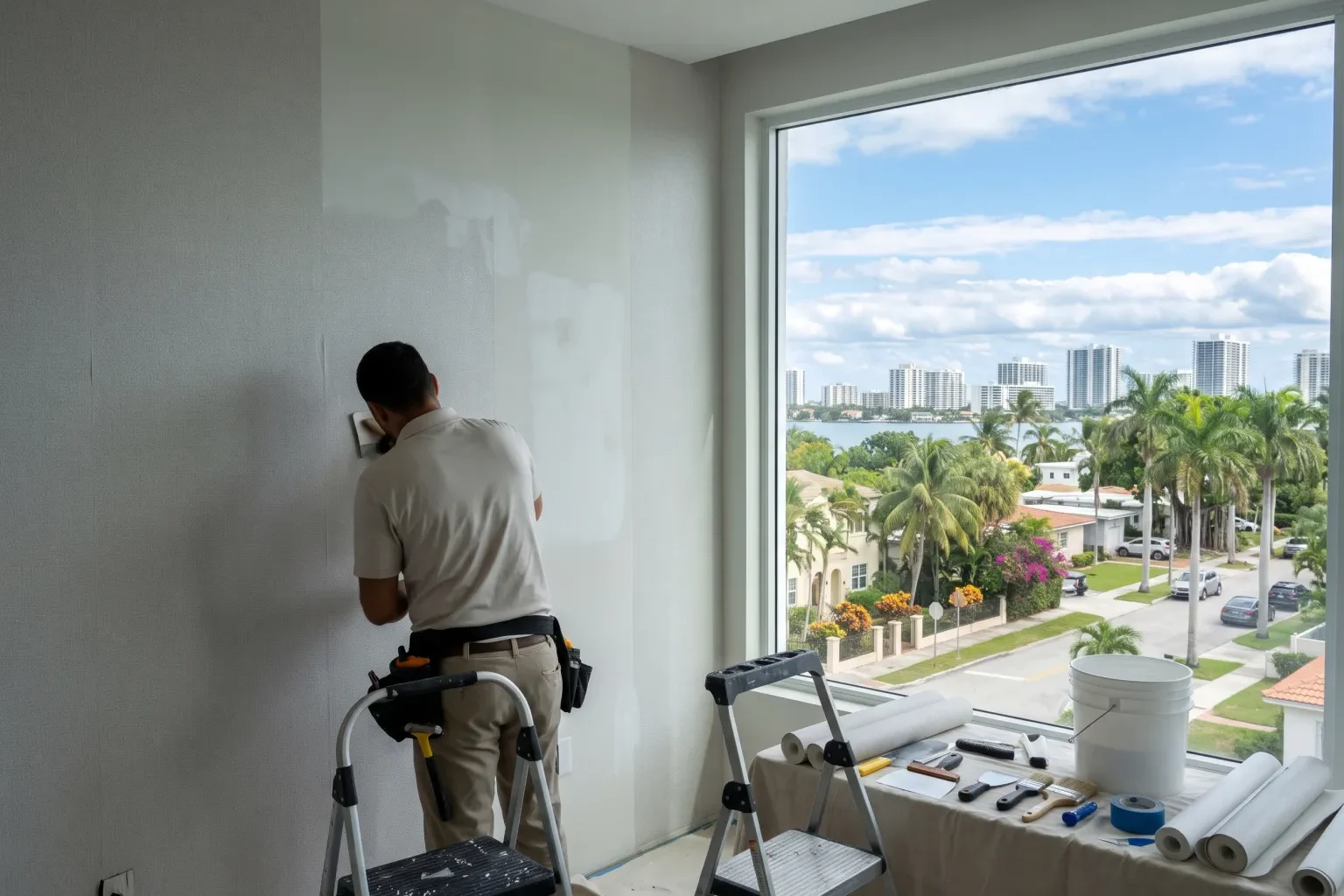
Ask any installer what decides how wallpaper looks a year later and the answer is rarely the paper. It is the wall. A hairline crack, a ridge of old joint compound or a patch of glossy kitchen paint can show through a beautiful print, push seams open or make a whole strip let go. WallStyle Installers offers wall preparation and repair as its own service for Miami-area homeowners, either ahead of our own installation or for people who plan to hang the paper themselves. Below is when a wall needs this attention, the repairs and primers we use, how prep fits into the hanging process, what changes the amount of work, and how to protect the surface you end up with.
Signs your walls need work first
Some walls are ready for paper with little more than a wipe. Many are not. Shine a flashlight across the wall at a low angle at night and you will see what a sheet of wallpaper will highlight: nail pops, dents from furniture, tape seams that were never feathered out and sanded drips of paint.
In Miami we run into a few recurring situations. Older ranch homes often have plaster with spider cracks or areas patched over the decades with different materials. Concrete-block houses may have a thin finish coat that has hollow spots or hairline cracks following the mortar joints. Condo units that were rented out frequently tend to have many anchor holes and layers of flat builder paint. Rooms that had a roof leak or AC drain overflow may show stains or soft drywall. Any of these is a reason to fix the wall before ordering paper.
- Visible cracks, dents, holes or nail pops
- Orange-peel or knockdown texture
- Torn drywall face left behind by earlier wallpaper removal
- Adhesive residue that feels tacky when damp
- High-gloss or chalky paint
- Water stains, soft spots or bubbling paint
Repairs and primers we use
Small holes and dents get lightweight spackle; larger holes get a patch and setting-type compound that cures hard. Cracks are opened slightly, taped where needed and filled so they do not reappear. Torn drywall paper, a common leftover from a rough wallpaper removal, must be sealed with an oil-based or shellac-based primer before any water-based compound touches it, otherwise it bubbles.
Textured walls are skim coated with thin layers of joint compound until they are smooth, then sanded and dusted. Where there is water damage, we confirm the source has been repaired and the area has dried, cut out any drywall that has gone soft, and treat staining with a stain-blocking primer.
The last coat is a primer made specifically for wallcoverings. It evens out the porosity of patches versus paint, gives the paste something to grab, lets the installer slide each strip into place and, importantly, makes the paper strippable later. Bare compound and drywall without primer are the main reason removals turn into wall replacement.
Where prep fits in the installation sequence
Good prep is planned around the layout. Before any repair begins, we measure the room, check how the pattern repeat will fall and mark where seams will land. Those lines matter because a seam over a poorly feathered patch is far more likely to open. We give extra attention to the areas under future seams and around corners, windows and outlets where the paper will be trimmed.
Once primer has dried, the wall is checked one more time with a raking light. A plumb line is snapped for the first strip, and from there the paper goes up, seams are matched and rolled, and edges are trimmed at the ceiling and baseboard. If you are hanging the paper yourself, we leave the wall primed, smooth and marked with the start line so you can begin with confidence.
What makes prep bigger or smaller
Prep work varies more than any other part of a wallpaper project. A freshly painted drywall bedroom might need an afternoon of light patching and primer. A dining room in an older house with cracked plaster, two layers of old paper and a past leak could take several visits because compound and primer need drying time between steps.
The paper you choose also matters. Thin papers, grasscloth and dark-colored products reveal more of the wall, so they call for a smoother result than a thick textured vinyl. Large pattern repeats move seams around and can put them right over repairs. Room size, the number of openings and the height of the ceilings change how much surface there is to treat, and high stairwell walls need staging.
Protecting walls after the work is done
Freshly skimmed and primed walls should stay dry and dust-free until the paper goes on. Try to keep the room under steady air conditioning; very humid air slows drying and can cause primer to stay soft, which is especially noticeable from May through October in South Florida.
Once the paper is up, most of the long-term care is about moisture. Fix plumbing drips and AC drain issues promptly, keep bathroom fans running and watch exterior walls after heavy storms during hurricane season. A wall that stays dry and sound is one that will hold paper well and release it cleanly whenever you choose to change it.