The short answer
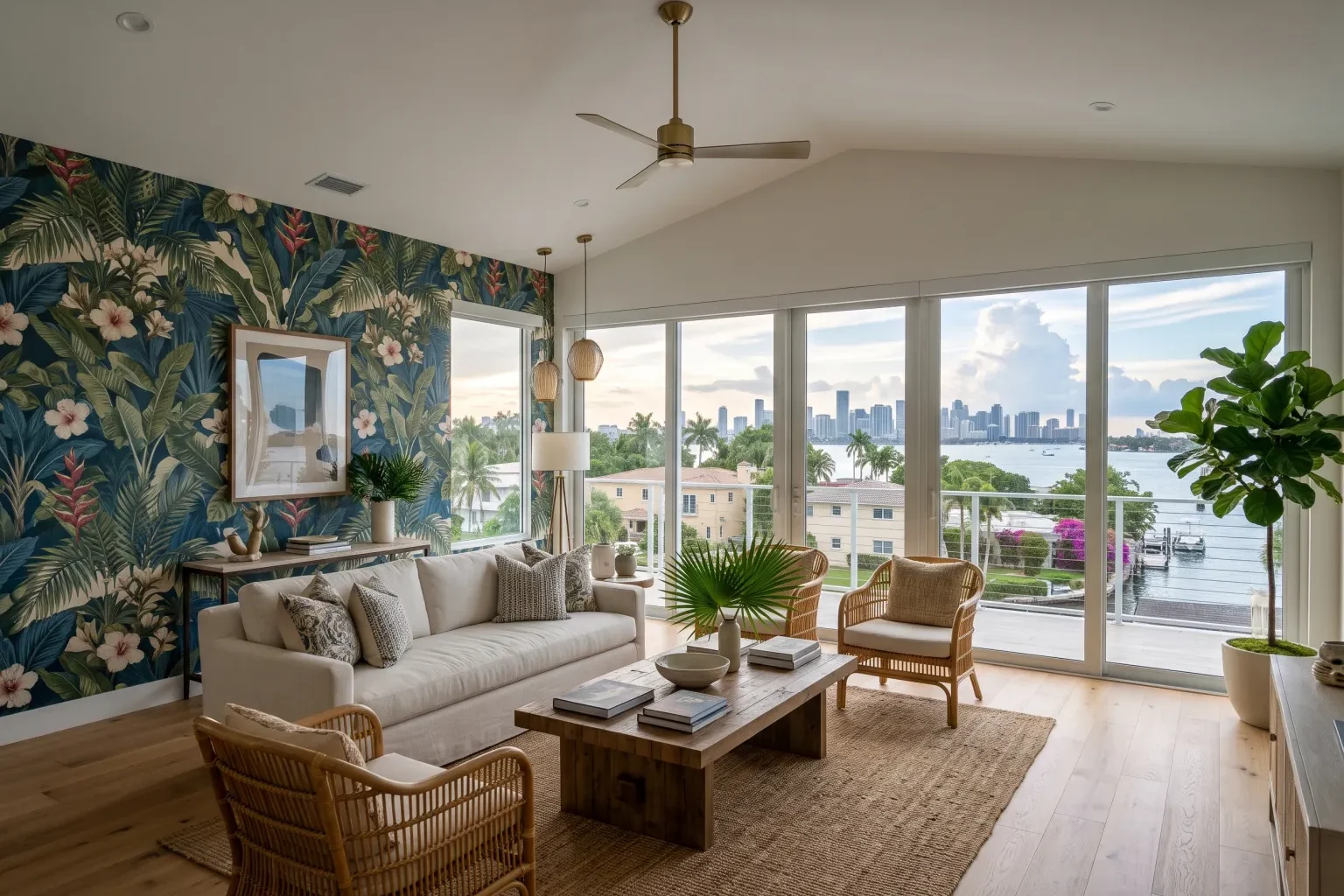
An accent wall is a single wallpapered surface that gives a room a focal point without covering every wall. We repair and prime the wall, plan the pattern around its center, hang and seam each strip, and trim it clean at the ceiling, baseboard and corners.
One papered wall can change how a whole room feels. It can pull the eye toward a headboard, give a plain living room a focal point behind the sofa, or make a narrow hallway seem deliberate instead of forgotten. WallStyle Installers hangs accent walls in houses, townhomes and condos across Miami and the surrounding cities. Because only one surface is covered, every flaw on that surface becomes more visible, so we treat a single wall with the same care we would give a full room. This page explains when an accent wall makes sense, how we get the surface ready, how the paper goes up, what changes the size of the job, and how to keep the finished wall looking sharp in a humid climate.
Is a single feature wall right for your room?
Accent walls work best when a room already has a natural anchor. In a bedroom that is usually the wall behind the bed. In a dining room it may be the wall the table faces, and in an open-plan Miami condo it is often the wall that separates the living area from the kitchen. A bold pattern there reads as intentional, while the remaining painted walls keep the space calm.
They are also a sensible way to try a strong print, a metallic finish or a dark color without committing a whole room to it. If you are unsure about a large botanical or a deep navy grasscloth, one wall lets you live with it first.
A feature wall is a weaker choice when the room has no clear focal point, when the wall in question is broken up by several windows and doors, or when the wall gets direct afternoon sun through west-facing glass. In those cases we will talk through another wall or a different material before you buy rolls.
- Good candidates: headboard walls, fireplace or TV walls, dining room end walls, the back of built-in shelving, a short hallway end
- Harder candidates: walls with many cutouts, walls that stay damp, surfaces next to a shower without a fan
- Worth a second look: walls facing strong sun, where some papers can fade over time
Getting the surface ready
Most of the quality in an accent wall is decided before the first strip is pasted. Many South Florida homes have concrete-block exterior walls finished with plaster or skim coat, while interior partitions are usually drywall. Each behaves differently, and we check which one you have before choosing a primer.
We start by looking at the wall in raking light, holding a work light flat against it so small dents, old anchor holes and ridges from previous patches show up. Those are filled and sanded flush. Glossy paint is dulled so the primer can grip. If there is old wallpaper or adhesive residue, it comes off first, because new paper over old seams almost always shows.
Moisture matters here more than in many parts of the country. Air conditioning keeps most interiors comfortable, but a wall that sits against a bathroom, a laundry room or an exterior surface that takes on water during summer storms can hold dampness. We test suspicious areas and will not hang over a wall that is still wet.
Finally, the wall gets a wallpaper primer suited to the paper you chose. Primer evens out how quickly the paste is absorbed, helps the paper slide into position, and makes future removal far easier without tearing the drywall face.
How the paper goes up, step by step
With a single wall, symmetry is the whole point, so the layout is planned from the center out rather than from a corner.
- Measure the wall height and width, note outlets and switches, and confirm the pattern repeat printed on the roll label
- Find the visual center, usually the middle of the bed or fireplace, and decide whether a strip or a seam lands there so the motif sits evenly
- Snap a plumb line with a laser or level, since walls and ceilings in older ranch homes are rarely perfectly square
- Cut strips with extra length at top and bottom, matching each one to the last before cutting so the pattern lines up across the seam
- Paste the wall or the paper, depending on the product, and book traditional papers for the time the manufacturer specifies
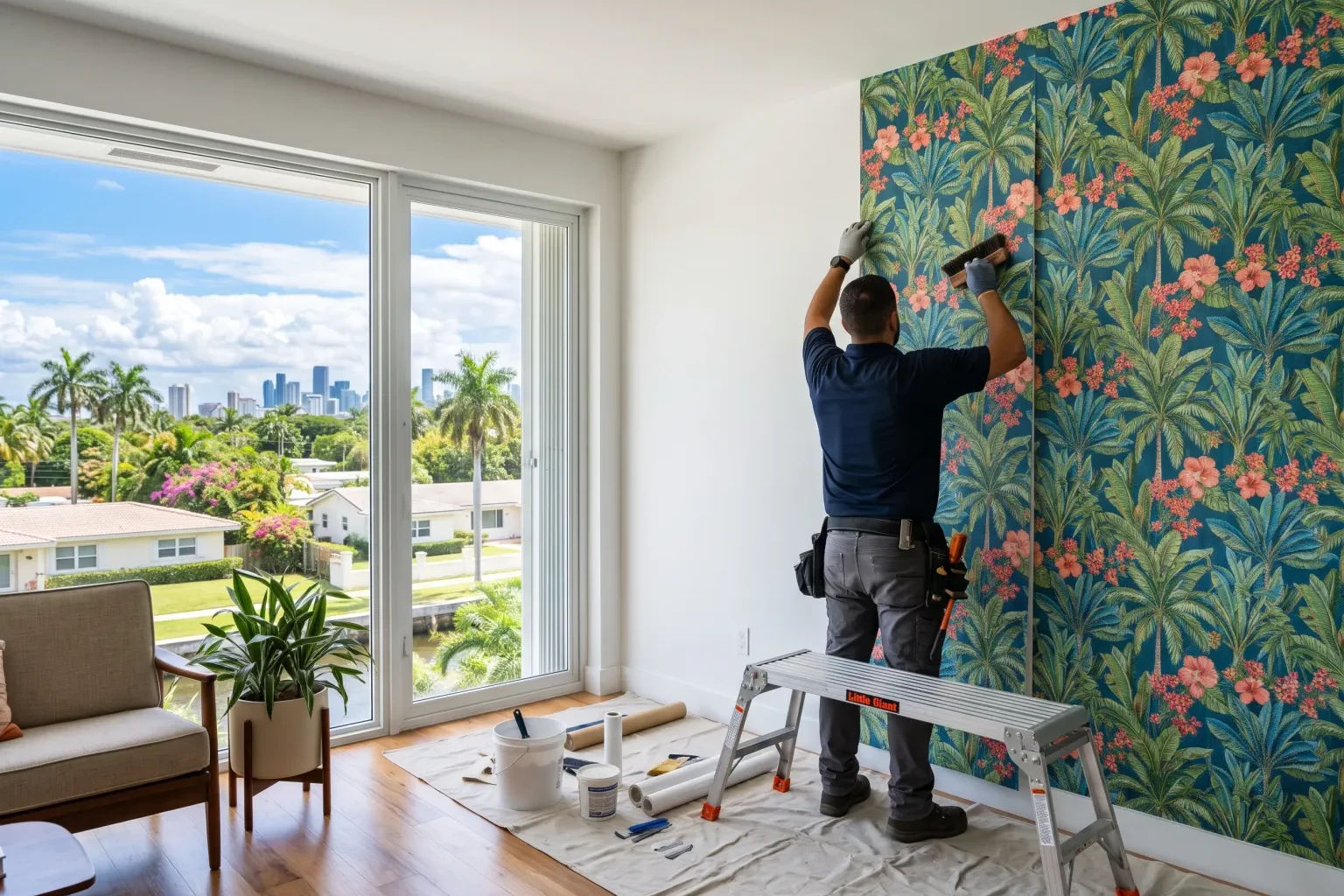
- Hang each strip to the plumb line, butt the edges tight without overlapping, and smooth out air with a soft brush or plastic smoother
- Roll seams lightly so they lie flat without squeezing out too much paste or burnishing the surface
- Trim at the ceiling line, baseboard and side corners with a fresh blade and a broad knife, changing blades often so the paper never tears
- Cut neatly around switch plates and outlets with power off, then reinstall the covers
- Wipe paste from the face and edges with clean water before it dries
What changes the size of the job
We do not publish set figures because two accent walls of the same width can take very different amounts of labor. These are the things that move the estimate up or down.
- Condition of the wall: a smooth, sound painted wall needs little prep, while cracked plaster, heavy texture or old paper adds hours
- Paper type: standard pre-pasted papers hang quickly; grasscloth, silk, flocked or hand-printed papers need slower handling and more careful seaming
- Pattern repeat: a large drop repeat wastes more paper per strip and takes longer to align across the wall
- Wall size and height: tall walls in two-story living rooms or over stairways need scaffolding or extra ladders and more time per strip
- Cutouts: windows, doors, niches and many outlets each add precise trimming work
- Access: furniture that needs moving, built-ins that stay in place, or a high-rise condo with limited elevator time all play a part
Living with your accent wall
Let the wall settle for a couple of days before hanging art or pushing furniture against it, so the adhesive cures fully. Keep the air conditioning running normally during that period; sudden swings in humidity while paste is drying can open seams.
For routine care, dust the surface with a soft dry cloth or a vacuum brush attachment. Washable vinyl papers can take a lightly damp sponge, but grasscloth and other natural fibers should stay dry, so spot clean them gently and only as the manufacturer allows. Avoid harsh cleaners on any wallpaper.
During hurricane season, if the house closes up and power goes out for a stretch, the indoor air can turn humid quickly. Once power is back, run the AC and a dehumidifier to bring things back to normal. If you notice a lifting edge afterward, a small amount of seam adhesive pressed in with a clean roller usually fixes it, and we are glad to come back and take care of it.
Accent Wall Installation by city
- Accent Wall Installation in Cutler Bay
- Accent Wall Installation in Homestead
- Accent Wall Installation in South Miami
- Accent Wall Installation in Coral Gables
- Accent Wall Installation in Sweetwater
- Accent Wall Installation in Florida City
- Accent Wall Installation in West Miami
- Accent Wall Installation in Doral
- Accent Wall Installation in Miami Springs
- Accent Wall Installation in Medley
- Accent Wall Installation in Hialeah
- Accent Wall Installation in Hialeah Gardens