
The short answer
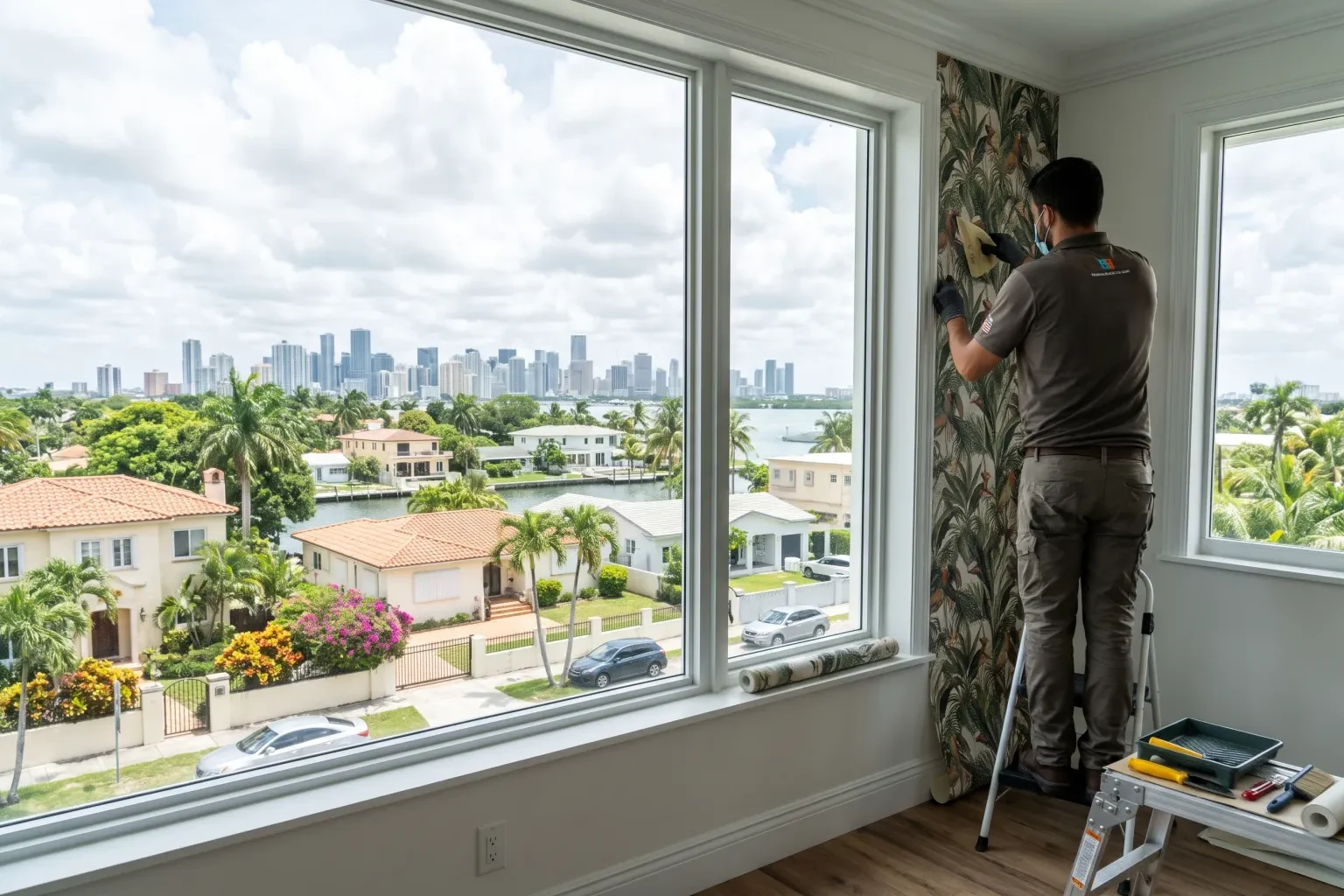
Wallpaper is a strong choice for bedrooms, dining rooms, powder rooms, offices, hallways and accent walls in an air-conditioned home. We repair and prime the walls, measure for the pattern repeat, hang from a plumb line, match and roll every seam and trim each edge cleanly.
Paint gives a room color; wallpaper gives it character. A small-scale geometric can make a powder room feel tailored, a soft damask can warm up a formal dining room, and a bold tropical leaf print can turn a plain stairwell into something you notice every time you walk up. WallStyle Installers handles traditional wallpaper installation for houses, townhomes and condos in Miami and the cities around it, working with unpasted, pre-pasted, non-woven and paste-the-wall papers. This page covers how to tell if wallpaper is a good call for a given room, the wall preparation we do, our hanging process from the first measurement to the final trim, the factors that shape each project, and simple care once the job is finished.
Deciding if wallpaper suits the space
Ask how the room is used day to day. Spaces where people sit, sleep or eat are ideal, because the walls get looked at rather than bumped. Powder rooms are a favorite since they are small enough for a dramatic print without overwhelming the house. Home offices benefit from a backdrop that looks finished on video calls. A single accent wall behind a bed or a built-in is an easy starting point if you are unsure about committing to a whole room.
Room conditions matter too. In Miami, steady air conditioning protects most papers from humidity, while a room that is often closed and unconditioned, or a full bath with weak ventilation, needs a more moisture-tolerant product. Large windows with strong sun call for papers with fade-resistant inks. We will tell you plainly if the paper you have chosen is a poor match for the room, and suggest a type that will hold up better.
Getting walls ready to hang
We walk the room first, removing switch plates and outlet covers, moving furniture to the center and covering floors. Then we look closely at the wall. Holes and cracks are filled, ridges sanded, glossy paint scuffed and any old wallpaper or residue removed. If the walls have texture, a skim coat brings them smooth.
Every wall is then coated with a wallcovering primer suited to the paper. This primer controls how fast the paste soaks in, helps strips slide into alignment, adds grab for heavier products and makes the eventual removal far gentler on the drywall. On a dark wall going under a light paper, a tinted primer keeps the old color from peeking through at the seams.
Step by step on install day
Here is how a typical room comes together once the primer is dry.
- Measure each wall's height and width and calculate the number of strips, allowing for the pattern repeat and a few inches extra at top and bottom
- Plan the layout so the pattern is centered on the focal wall and the final mismatched seam falls in a low-visibility corner, often behind the door
- Check that every roll shares the same batch number and inspect the print for defects
- Cut the first strip and snap a plumb line; walls and corners are almost never perfectly vertical
- Paste the paper or the wall depending on the product, and book pasted strips so they relax before hanging
- Hang the first strip on the line, smoothing from the center outward to remove air
- Match the pattern on each new strip at eye level, butt the seams tightly and roll them gently
- Wipe off excess paste right away with a damp sponge
- Trim at the ceiling, baseboard, windows and doors with a straightedge and a sharp blade, changing blades often
- Cut openings for outlets and switches with power off, then reinstall the covers
What shapes the size of a project
We give a written quote after seeing the room because each job is different. The walls themselves are the starting point: a smooth, recently painted wall needs far less prep than one with texture, cracks or old paper to strip. The type of paper changes the handling. Pre-pasted papers are quick; delicate hand-printed, metallic or flocked papers take extra care, and grasscloth or murals have their own steps.
Pattern repeat is a quiet factor. A large drop-match repeat means more cutting, more waste and slower alignment. The size of the room, the number of corners, windows, doors and cabinets to work around, and ceiling height all play in. Two-story foyers and stairwells need scaffolding or planks to hang safely and line up the seams.
Looking after new wallpaper
Give the paste a couple of days to dry fully. During that time small bubbles can flatten on their own, so resist the urge to poke at them. Keep the AC running at a normal setting rather than turning the room into an icebox or shutting it off, since fast swings can make seams shrink apart.
After that, most care is simple. Dust occasionally with a soft cloth. Check the product label: washable papers can take a damp sponge, while non-washable ones should only be spot-blotted. Keep furniture an inch or so off the wall to avoid rubbing. If a seam lifts, call us to reglue it before it tears. Through the wet summer months and hurricane season, a steady indoor climate is the best protection your wallpaper can get.
Wallpaper Installation by city
- Wallpaper Installation in Cutler Bay
- Wallpaper Installation in Homestead
- Wallpaper Installation in South Miami
- Wallpaper Installation in Coral Gables
- Wallpaper Installation in Sweetwater
- Wallpaper Installation in Florida City
- Wallpaper Installation in West Miami
- Wallpaper Installation in Doral
- Wallpaper Installation in Miami Springs
- Wallpaper Installation in Medley
- Wallpaper Installation in Hialeah
- Wallpaper Installation in Hialeah Gardens